#PHISO2025 International Conference: “The international, global, and worlding textbook: Exploring global south perspectives and Philippine cases on International Studies, International Relations, and Global Affairs”

After PHISO’s two book publications, (1) International Studies in the Philippines: Mapping New Frontiers in Theory and Practice (Routledge and Ateneo de Manila University Press) — a finalist to the 41st National Book Awards in the Social Science category; and (2) The Contemporary World (C&E Publishing, Inc.), we decided to work on a textbook that will emphasize global south and Philippines’ experiences and knowledge contributions to the study of the international.
Click here to register. The registration deadline is on October 25, 2025.
The conference venue is at Dos Casa De Amena private resort located at Far East Avenue, Bankers Village, Bagumbong, Caloocan City, Metro Manila, Philippines. Click here to contact them via Facebook page or at +63.908.786.2130.
Celebrating PHISO’s 10-year anniversary on November 07-08, 2025 in Metro Manila, this conference call leading to a textbook publication brings together illuminating essays that highlight the contributions of Philippine and global south scholarships to the fields of International Studies, International Relations, and Global Affairs (IS/IR/GA). Putting the Philippines and Global South experiences and their knowledge contributions at the center stage of IS/IR/GA rather than being in the periphery is our everlasting holy grail—that is, establishing the Filipino IS/IR/GA canon. Interwoven epistemic knowledges and lifeworld experiences of the global south in general and the Philippines in particular reflect the corpus indicated in these 12 sections of the textbook to be presented in a roundtable discussion (RTD) format retracting from the conventional conference panel presentation. May 15 June 30 is the new deadline to submit essay abstracts alongside proponents’ CVs.
PHISO@10 Anniversary Keynote Speakers
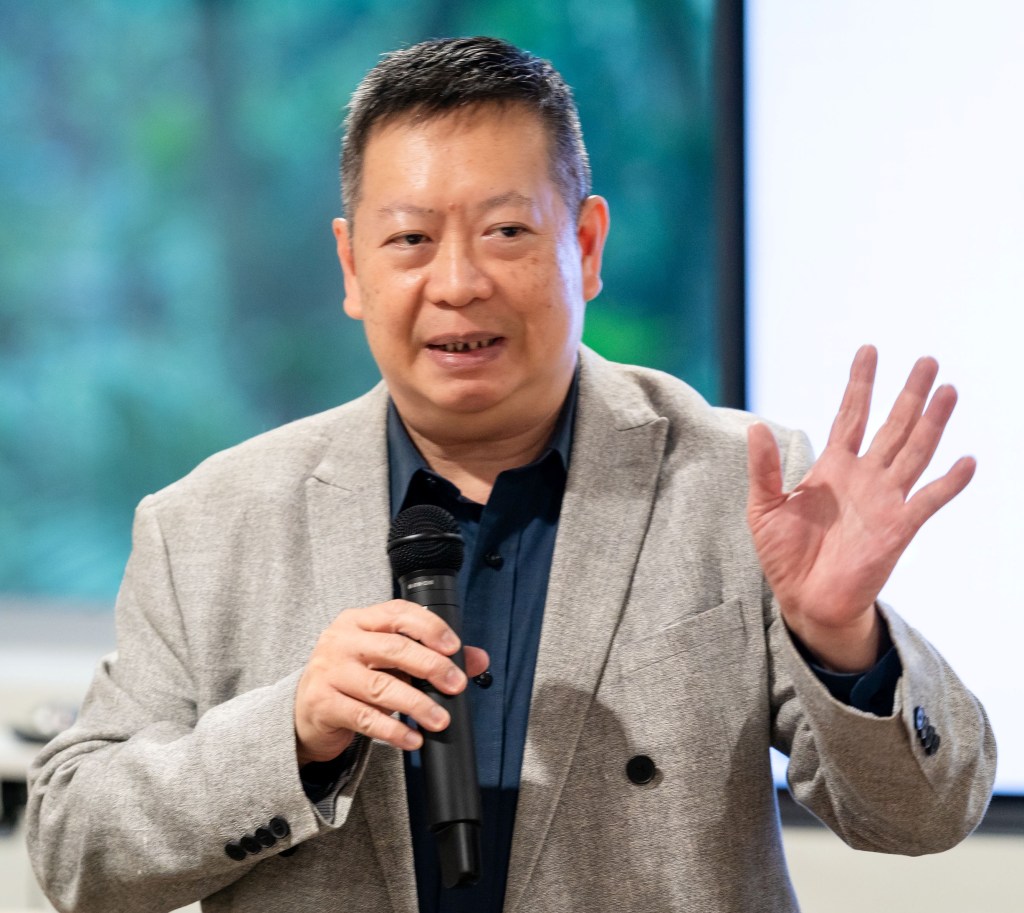
“An East Asian Peace through Relationality: Thinking through Ambiguities, Photogenic Amity and Functionalism, and See-saw Logics”
Despite occasional conflict flare-ups such as the Thai-Cambodian border fracas, the endless armed incidents in the Spratly islands, China-Taiwan tensions and the fraught inter-Korean relations, Asia has thus far avoided the descent into all-out conflicts as seen in the Middle East and eastern Europe. Realists have held sway on this by explaining the durability of power balancing and the management of great power rivalry. Neo-liberals and constructivists have accounted for the Asian peace by pointing to a raft of loose institutions such as the ASEAN Plus processes, the ASEAN Regional Forum, East Asia Summit, the ADMM Plus and APEC as ‘talkshops’ to generate discourses for avoiding conflict. Critical Asian political approaches can enrich this debate by focusing on the operational and cultural factors in Asian international relations that retard the need to resort to armed solutions. These factors include practiced diplomatic ambiguity, photo-friendly evidence of regular summitry and functionalist contacts, and the cultural adaptability to ‘see-saw logics’ in managing outstanding bilateral and multilateral conflicts.
(Dr) ALAN CHONG is Senior Fellow at the Centre for Multilateralism Studies within the S. Rajaratnam School of International Studies (RSIS) in Singapore. He has published widely on the notion of soft power and the role of ideas in constructing the international relations of Singapore and Asia. This has stemmed from his doctoral work on soft power in the early 2000s. These ideational angles have also led to inquiry into some aspects of ‘non-traditional security’ issues in Asia. His publications have appeared in The Pacific Review; Contemporary Southeast Asia; South East Asia Research; Cambridge Review of International Affairs; Armed Forces and Society; Journal of Strategic Studies; Global Studies Quarterly, Geopolitics, Comparative Strategy and the Review of International Studies. He has also edited the book International Security in the Asia-Pacific: Transcending ASEAN towards Transitional Polycentrism (Palgrave, 2018) and served as co-editor (with Quang Minh Pham) of Critical Reflections on China’s Belt and Road Initiative (Cham: Springer Nature under the imprint of Palgrave Macmillan, 2020). In 2023, he co-edited with Nicole Jenne, under the Bristol University Press imprint a book titled Asian Military Evolutions: Civil-Military Relations in Asia. His interest in soft power has also led to inquiry into the sociological and philosophical foundations of international communication. This culminated in the publication of The International Politics of Communication: Representing Community in a Globalizing World (University of Michigan Press, 2025). Alan Chong can be contacted at: iscschong@ntu.edu.sg
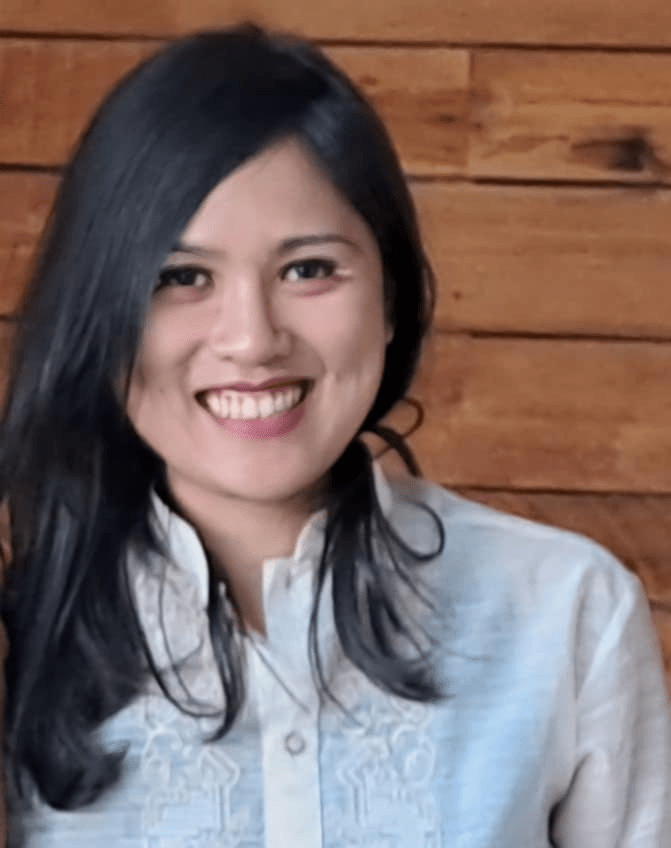
“PHISO and Bandung’s 70th: The Imperative of Transformative South-South Relations”
Dr FRANCES “FRANKIE” CRUZ is an Assistant Professor at the College of Arts and Letters, University of the Philippines, Diliman. She obtained her PhD in Political Science at Ghent University and in Literature and Linguistics at the University of Antwerp. Frankie is the current Vice President of the European Studies Association of the Philippines and was a former president of the Philippine International Studies Organization. Her present research interests involve the application of digital text analysis methods to securitization, conceptual history, and social media discourse.
Textbook section/RTD-01: “Global south and Filipino-worlding concepts, history, religion, and theories on International Studies, International Relations, and Global Affairs”
In the last few decades, calls for diversifying IR by looking at the global south experiences increased dramatically. Emancipating IR from the perils of being imprisoned to “political” and gradually relying on and contextually aligning with philosophies, concepts and paradigms from sociology, geography, economics, cultural studies, religion, history, humanities and literature tends to become the mainstream trend. This decade-long trend led to birthing of global IR, worlding IR, gendered IR, Islamic IR, nationalizing IR away from its provincial Europe/US geopolitics, amongst others. One example is “Philippine IR.” The country’s struggle for right to self-determination culminated in gaining its independence from the US in 1946 and its unique People Power Revolution toppling the Marcos dictatorship in 1986 that inspired countless revolutions worldwide. One provocative global action is the civil society-led campaign for Timor-Leste’s liberation from Indonesia which violated ASEAN’s non-interference policy, a clear sign of the Philippine’s critical role in spreading democratic ideals and people’s freedoms. But how do these actions and initiatives reflect concepts on Filipino worlding, history, and religion? How global south IR perspectives put primacy to the voices of othering, marginalized minorities, and disenfranchised sectors and communities?
Some relevant topics:
- 1.1 Filipino experiences and how they relate to solidarity in South-South cooperation.
- 1.2 Solidarity in South-South Cooperation: Explore how Filipino experiences contribute to collaborative efforts among developing nations.
- 1.3 Filipino Worldviews: Analyze how cultural and religious perspectives shape international relations and foreign policy.
- 1.4 Historical Context: Discuss the impact of colonial history on current Philippine international relations.
- 1.5 Civil Society’s Role: Examine the influence of Civil Society Organizations in promoting democracy and human rights in the Global South.
- 1.6 Dependency Theory: Investigate how dependency theory applies to the Philippines and its relationships with more developed nations.
- 1.7 Marginalized Voices: Consider how marginalized groups in the Philippines perceive and engage with international relations.
- 1.8 Global South Perspectives: Evaluate the need for new theoretical frameworks in international relations that reflect the realities of Global South countries.
Textbook section/RTD-02: “Asian and Filipino pedagogies (teaching methods and practices) on International Studies, International Relations, and Global Affairs”
For decades, Asian and Filipino IR pedagogies have been immensely dominated by how IR is taught in the US and Western Europe, mostly concentrating on political realism, positivism, and traditional security matters. Almost all pioneering Asian and Filipino IR teachers gained their post-graduate education in Western academic institutions, clouded by post-Cold war politics and thus creating disciples reflective of unending replication of their teaching practices and materials which led to an eventual establishment of a gatekeeping industry. However, in the last decade or so, many enlightened early-to-mid-career IR academics are challenging the gatekeeping oligarchs beholden of Western IR’s universalism by a more prudent care for a multi-perspectivist approach that accentuate the voices and experiences of their own communities and how their worldviews are seen relevant to their everyday lived realities and norms. They are now embracing new methods and techniques that had previously been developed in history, anthropology, sociology and other related disciplines.
Some relevant topics:
- 2.1 IR/IS pedagogy in post-graduate programs
- 2.2 Practices and tips in a more personal narrative form on IR/IS
- 2.3 Use of survey IR/IS courses and interactive learning modules
- 2.4 IR/IS curriculum, course design, teaching subject areas, and in-class teaching techniques
- 2.5 Promotion of advanced interdisciplinary conversations of IR/IS with other social sciences and humanities.
- 2.6 Exploring new IR/IS course structures and goals; techniques and approaches to the classroom; and assessment and effectiveness.
- 2.7 Various essential teaching methodologies, including case studies, simulations, debates, and the use of multimedia resources, field trips, and exchange programs
- 2.8 The role of theory, teaching research design and writing, simulations and games, ethics, active learning, the case study method, using film and television to teach IR, and service learning and experiential education approaches.
- 2.9 Different pedagogical approaches such as “building-blocks” method, which emphasizes theoretical frameworks; the “comprehensive” method, which offers a broad overview of topics in a condensed format; the “epistemology” approach and the “paradigmatic” approach, which introduce philosophical and theoretical paradigms, respectively.
Textbook section/RTD-03: “Philippine foreign policies, diplomacy, and trade relations with ASEAN, EU, UN, US, Russia, East Asia, China, India, Middle East, Latin American countries, amongst others”
The Republic Act No. 7157 or also known as the “Philippine Foreign Service Act of 1991” mandates the Department of Foreign Affairs to implement the three (3) pillars of Philippine Foreign Policy: 1) preservation and enhancement of national security; 2) promotion and attainment of economic security; and 3) protection of the rights and promotion of the welfare and interests of Filipinos overseas. These pillars are the basis of any foreign policy decision of the Philippine Government. It behooves all political, bureaucratic, or diplomatic actors to carry out the advancements of these objectives. But how are these pillars constructed? How do actors in Philippine foreign policy understand and implement these through our bilateral, trilateral, or multilateral relations? These are precisely the questions we seek to ask (and at least proffer insights) in this Call.
More specifically, we welcome essays that fall in one of these topic areas:
- 3.1 Interrogating National Security and Territorial issues
- 3.2 Interrogating Economic Security and Trade
- 3.3 Democratizing Philippine Foreign Policy Decision-Making
- 3.4 The Philippines as a Middle Power
- 3.5 The Philippines and Regional Cooperation
- 3.6 Diplomatic Practices and Network Governance
Textbook section/RTD-04: “Global warming adaptation, climate change resiliency, environmental policies, and green revolution in the Philippines and the global south”
As observed by climate scientists through weather pattern changes in temperatures, precipitation, and storms as well as ocean currents and atmospheric chemical compositions, the world is experiencing a drastic periodic climate modification. The disproportionate impact of climate change on the Global South cannot be overstated. While contributing minimally to global greenhouse gas emissions, much of the developing world continues to bear the brunt of rising sea levels, extreme weather events, and biodiversity loss. Amid limited capacities to adapt and mitigate disaster risks, these challenges exacerbate existing vulnerabilities and inequalities, including those based on class, gender, and race. Despite the urgency of these challenges, commitments from the Global North to support climate adaptation and mitigation and DRR efforts in vulnerable countries, despite being extremely crucial, remain inconsistent. Pledges for financial assistance, technology transfer, and capacity-building often fall short of the scale required to address the looming climate emergency effectively. Such a gap underscores the need for alternative and additional pathways that empower Global South countries to lead their own climate and disaster resilience efforts.
Some relevant topics:
- 4.1 United Nations Framework Conventions on Climate Change (UNFCCC or COP 26) agreements since the 1987 Montreal Protocol, 1997 Kyoto Protocol, 2001 Marrakesh Accords, 2015 Paris Agreement, up to the 2019 Climate Action Summit and until the 2020 Postponement of COP 26
- 4.2 The Anthropocene effects and impacts to Earth’s climate
- 4.3 Analyses to Philippine’s environmental and climate change policies and programs
- 4.4 Disproportionate impacts of climate change on the global south in terms of water, food and agriculture, vulnerable populations, and political economy of development.
- 4.5 Domestic and regional climate governance in the Asia-Pacific in terms of its current status, prospects, and challenges to institutions and international frameworks, renewable energy, geopolitics, and disaster capitalism.
- 4.6 Innovations in Climate Action: Strengthening Resilience in the Philippines
- 4.7 Global south pathways and solutions for South-South cooperation/solidarity and the role of civil society.
Textbook section/RTD-05: “Sustainable development and human security on food, water, energy, interconnectivity, and fiscal securities in the Philippines and beyond”
The Philippines is among the fastest-growing economies in the Global South, where rapid economic expansion must align with the principles of sustainable development. Food, energy, water, finance, and connectivity are not only key drivers of economic progress but also essential pillars of sustainable and inclusive growth. However, ensuring that this growth remains sustainable requires a holistic approach that acknowledges the deep interconnections among these sectors. The challenge for the Global South lies in balancing economic development with environmental and social responsibility, social equity, and long-term efficiency and resiliency. This Call aims to explore strategies, policies, innovations, gaps, and trade-offs that the Philippines must navigate to ensure human security and sustainable development across water, food, energy, connectivity, and finance.
Some relevant topics:
- 5.1 Sustainable Finance and Green Investments
- 5.2 Sustainable Microfinance Financial Security
- 5.3 Digital Connectivity, Infrastructure and Sustainable Digital Ecosystem
- 5.4 Sustainable Transport Connectivity in Urban Areas
- 5.5 Public-Private Partnerships in Achieving Energy Security
- 5.6 Sustainable Water Resource Governance and Management
- 5.7 Indigenous Knowledge and Sustainable Food Systems
- 5.8 Agroecology and Sustainable Farming
- 5.9 The Impact of the Blue Economy on Food, Water, and Energy Security
- 5.10 Transition to Renewable Energy: Policies, Practices, and Innovations
- 5.11 The ASEAN Way to Human Security and Sustainable Development
- 5.12 The Water-Energy Nexus in the SDG: Challenges for Sustainable Development in the Global South
Textbook section/RTD-06: “From the “new normal” to a “new future”: Exploring sustainable post-pandemic Philippine healthcare and developing world’s public health system”
In late 2019, Coronavirus Disease 2019 (COVID-19) was first discovered in the busy night market of Wuhan. Chinese authorities began treating dozens of cases with symptoms such as pneumonia and began verifying that the disease is highly contagious. A few months later, the World Health Organization declared the outbreak a global pandemic. Countries had to impose rigid protocols and enforce travel limitations through air, sea, and land trips. A series of government lockdowns emerged to lessen people’s exposure to the virus. At the same time, health authorities had to function extensively and put their actions at their best, including the production and issuance of vaccines. It is the new normal. In the Philippines, the pandemic was not only a health problem but an economic one. Many business firms and several establishments were pushed to shut down. There are about 4 million people who were submerged into poverty in the first half of the year due to reduced domestic demand for employment. The economy shrank to 16.5% in the second quarter, which led to the Philippines’ first recession after decades of a growing economy. This Call wants to interrogate sustainable post-pandemic Philippine healthcare measures aligned with international public health standards while maintaining economic efficiency and resiliency.
Some relevant topics:
- 6.1 Impact analysis to Philippine healthcare system
- 6.2 Exploring sustainable post-pandemic Philippine healthcare system
- 6.3 Insights to sustainable post-pandemic international public health standards and measures
- 6.4 Comparative analysis between the Philippine healthcare with another global south country
- 6.5 Detailing post-pandemic global south efforts against COVID-19 and other mutated viruses
- 6.6 WHO post-pandemic measures, advisories, and policies
Textbook section/RTD-07: “Security outlook on conflicts, terrorism, and violent extremism: Philippine and global south experiences on territorial disputes, crises, and wars”
For two decades and counting, the Global War on Terror (GWOT) remains a significant influence on addressing the threats of terrorism and violent extremism. It has been persistent, and more so with the rise of Daesh several years ago, it significantly sustained the resources and attention to the security issue. The 9/11 bombings became an effective tool to rally the support of what was later known as the Coalition of the Willing, a group of states allied with the US against international terrorism. Among those which remain to be under the influence of the GWOT is the Philippines with its struggle against terrorism and violent extremism in Mindanao. Mostly, the GWOT resonated well with the Philippines’ security concerns. From the past three administrations until the Marcos regime, the Philippines has been actively involved with the subsequent mobilization of counterterrorism, engendering varying levels of cooperation with the US and its allies on this issue. This has been characterized by various initiatives that are not limited to capacity-building measures, information sharing, and equipment transfer. The Call highlights global south and Philippine experiences on conflicts, terrorism, and violent extremism.
Some relevant topics:
- 7.1 Impact analysis on the global war on terror
- 7.2 Global south countries responses to threats of terrorism and violent extremism
- 7.3 Territorial disputes, crises, and conflicts in the global south
- 7.4 Philippine and global south cooperation in combatting terrorism and violent extremism
- 7.5 National action plan, strategies and policies of the Philippines in countering violent extremism
- 7.6 Bangsamoro regional action plan, strategies and policies regarding PCVE
Textbook section/RTD-08: “World’s fifth industrial revolution, digital governance, artificial intelligence, and social media in the Philippines and the developing world”
We now stand on the threshold of a profound shift in power, one that extends beyond the confines of a single nation-state and into the boundless realms of the digital era—cyberspace. While technology undoubtedly wields significant influence, the dawn of the Fifth Industrial Revolution (Industry 5.0), characterized by humans’ augmentation working alongside advanced technology and AI, heralds a transformative era for governance and state relations in the developing world. This Call is particularly interested in (1) exploring how cybersecurity can shape the decisions and influence the power dynamics of decision makers in both the private and public sectors; (2) how digital currencies raise concern regarding security, economic stability, and digital governance; (3) how AI technologies influence global governance, security, human rights, and economic structures; (4) how AI is seen as a transformative tool for solving global challenges while at the same time a source of ethical concerns; (5) how digital governance and AI may reshape modern warfare; and, (6) how international cooperation and the creation of transparent and inclusive frameworks may regulate AI and cybersecurity in ways that prioritize human dignity and equity.
Some relevant topics:
- 8.1 Ethical implications of artificial intelligence
- 8.2 Cybersecurity and its implications in the Philippines and state relations
- 8.3 Combatting disinformation through citizen e-participation in the ASEAN governance
- 8.4 The shift from paper bills to digital currencies: transition, governance, and regulatory Barriers
- 8.5 AI influence on global governance, security, human rights, and economic structures
- 8.6 Digital governance and AI potency on modern warfare
Textbook section/RTD-09: “Global gender justice, peace building, peacekeeping, and gender development analysis in the Philippines and the global south”
This Call examines the crucial nexus of gender mainstreaming, peacebuilding, peacekeeping, and global gender justice, focusing on the Philippines and the broader Global South. It will explore effective strategies for integrating gender perspectives into every stage of peacebuilding, from negotiations to implementation. Aimed at underscoring the indispensable role of women in peacebuilding and peacekeeping, and analyzing their contributions and the obstacles they encounter. Discussions will encompass critical issues such as violence against women and gender-based violence; economic and food insecurity; the marginalization of women in political and decision-making spheres; and the insidious influence of gender stereotyping. These gender development challenges will be examined through a gender analysis framework, tracing the historical impact of patriarchy and colonialism as fundamental drivers of gender inequalities and conflict within the Philippines and across the Global South. The textbook section/RTD project will emphasize the pursuit of global gender justice, grounded in the core principles of equality and non-discrimination, access to justice, economic empowerment, political participation, the dismantling of harmful norms, and an intersectional understanding of gender.
Some relevant topics:
- 9.1 Violence against women (VAW) /gender-based violence (GBV)
- 9.2 Women, Peace and Security (WPS)
- 9.3 Women Leaders in the Fifth Industrial Revolution
- 9.4 Women Resilience in Disaster
- 9.5 Intersection of Gender and Economic Justice
- 9.6 Gender and Political Participation
- 9.7 Role of Culture and Religion in Shaping Gender Norms
- 9.8 Peacebuilding and Transitional Justice Mechanisms
- 9.9 Gender Mainstreaming in Development Programs
Textbook section/RTD-10: “Socio-economic mobility and migration, and global welfare spatialities of Overseas Filipino Workers (OFWs) and Third World skilled workers”
Scholars have argued that international migration is one of the strongest agents of global change in the contemporary world. The UN Population Division reported that Asians represented the largest share of migrants (diaspora) residing outside their countries of birth origin. Most of these fledgling developing economies implemented a policy of labor export and gained benefits from it through the remittances migrants sent from abroad. Indonesia and the Philippines are the largest labor sending countries in Southeast Asia (mostly unskilled and low-skilled workers), while Malaysia and Singapore are basically recipient countries. The big question is, why are Filipinos continuously deployed for employment abroad? What accounts for the increasing number of women leaving the Philippines? Where do they go abroad? What kind of jobs do they get while working abroad? How can migration help the economy? Do immigrants steal the jobs of native workers? These are just some of the questions that this Call wanted to address.
Some relevant topics:
- 10.1 Labor migration policies in the Philippines and in the global south countries
- 10.2 Analyses on the political, economic, cultural, and social factors underlying the global movements of people.
- 10.3 Display first-hand knowledge of the experiences of migrant workers in the context of Asia and the Philippine experience.
- 10.4 Role of women in the age of global migration.
- 10.5 Policy recommendations addressing the predicament of women migrants, including the mothers and their children left-behind
- 10.6 Role of the International Labour Organization in curbing insecurities among migrant workers
Textbook section/RTD-11: “Beyond nation-state borders: Asian worldviews and Filipino perspectives on international law, global norms, and transnational social movements”
Exploring international law, global norms, and transnational social movements in the Asian and Filipino contexts by drawing on legal theory, IR/IS, sociology and history, thus unfolding a comprehensive dynamism of how international law and global norms may look like for Asian peoples. Evidently, colonialism and imperialism have significantly shaped contemporary Asian perspectives on the three main topics. But on another hand, the Call is interested in exploring the dynamic interplay between regional and country-specific historical events and current geopolitical issues, providing a nuanced understanding of the complexities and diversities of international law, global norms, and transnational social movements as it applies to and perceived by Asian peoples.
Some relevant topics:
- 11.1 Theoretical approaches to understanding and critiquing international law’s Euro-centric imperatives
- 11.2 Examining international law, global norms, and transnational social movements in the Asian context.
- 11.3 Coloniality and universality of International Law, global norms, and transnational social movements
- 11.4 History and theory embedded in the intersection of colonialism and international law.
- 11.5 Unequal Treaties, Extraterritoriality, and International Settlements
- 11.6 Legal and political economic dimensions of post-colonial injustice and Asian subjectivities.
Textbook section/RTD-12: “Streams, screens, and solidarity: how popular culture, entertainment, and sports shape global consciousness about the Philippines and the global south”
In recent years, scholarship has paid attention to the role of popular culture, modern media entertainment, and sports in individual beliefs and international relations. From the implementation of soft power diplomacy, vlogging to the popularization of meme culture, the role of media and entertainment is as inescapable as peer influence, such that even the act of separating realities from fiction is a deliberate political discourse directed at agendas and narratives. The proliferation and politics over social media have also formed new discourses on free speech and even seen the rise of the Arab Spring and other social movements that applied social media. Today, there seems to be no mass movement that has not seen the involvement of social media in any way. The recent advent of streaming has also led others to ask not only about the decline of cinema and writer’s rights but also about the meaning of storytelling. Even beyond widespread impacts by media and media personalities, there is also a need to analyze the sociopolitical contexts of different literature and media, especially as there is an emergence of alternative cultures and cultural commentary, primarily from the West. This need for narrowed individual treatments of stories and media is relevant in the Digital Age as stories are treated as “politicized” under umbrella terms such as “woke” or “fascist” and therefore reflects on the grounding of political jargons and nuances in everyday life.
Some relevant topics:
- 12.1 Soft power strategies by and upon the Global South: On Concerts and Celebrities
- 12.2 Music and movements: K-pop, J-pop, and Band advocacies
- 12.3 Alt cultures and media consumption: Memes, Cancel culture, Wokeism, the alt-right vis-a-vis the Global South
- 12.4 The coloniality of storytelling: the emergence of streaming and its role in globalization
- 12.5 Social media and social movements: Arab Spring, Free Palestine and Beyond.
- 12.6 Social media and the role of alternative news and communication in international relations
- 12.7 Literature and human rights: How specific literature, media and art or exposure to literature, media and art shape human rights movements and perceptions.
- 12.8 Anime and International Relations: Influences in Animation Styles and Global Storytelling
- 12.9 Sports and international relations: diplomacy and power relations within and without sports events.
- 12.10 Sports and popular movements: How sports influence mass movements and political pressure in the Global South
- 12.11 Sports and society: Examination on the intersection of sports and social issues
Click here to submit your abstract proposal. Good news! Abstract submissions are extended until June 30, 2025.


Hi,
Thank you for this early call. I am not a book author, but I am very much interested in most of the topics that you plan to roll out during this conference. Kindly include me in your mailing list, particularly for information on attendance to the conference. Once again, thank you very much.
Sincerely,
Ernesto
LikeLike
Dear PHISO, thank you for your interest in INDUSTRY 5.0 (section 8). My name is Michael Rada, I am the Founder of INDUSTRY 5.0 implementing its principles in companies and businesses since 2013, leading a global network in 119 countries. If interested I can share the experience and insights of creating the biggest industrial trend of a century with you and your students in dedicaetd webinar the same I did in more than 1,000 schools, colleges and universities all around the globe
I am looking forward to our cooperation
Michael Rada
LikeLike